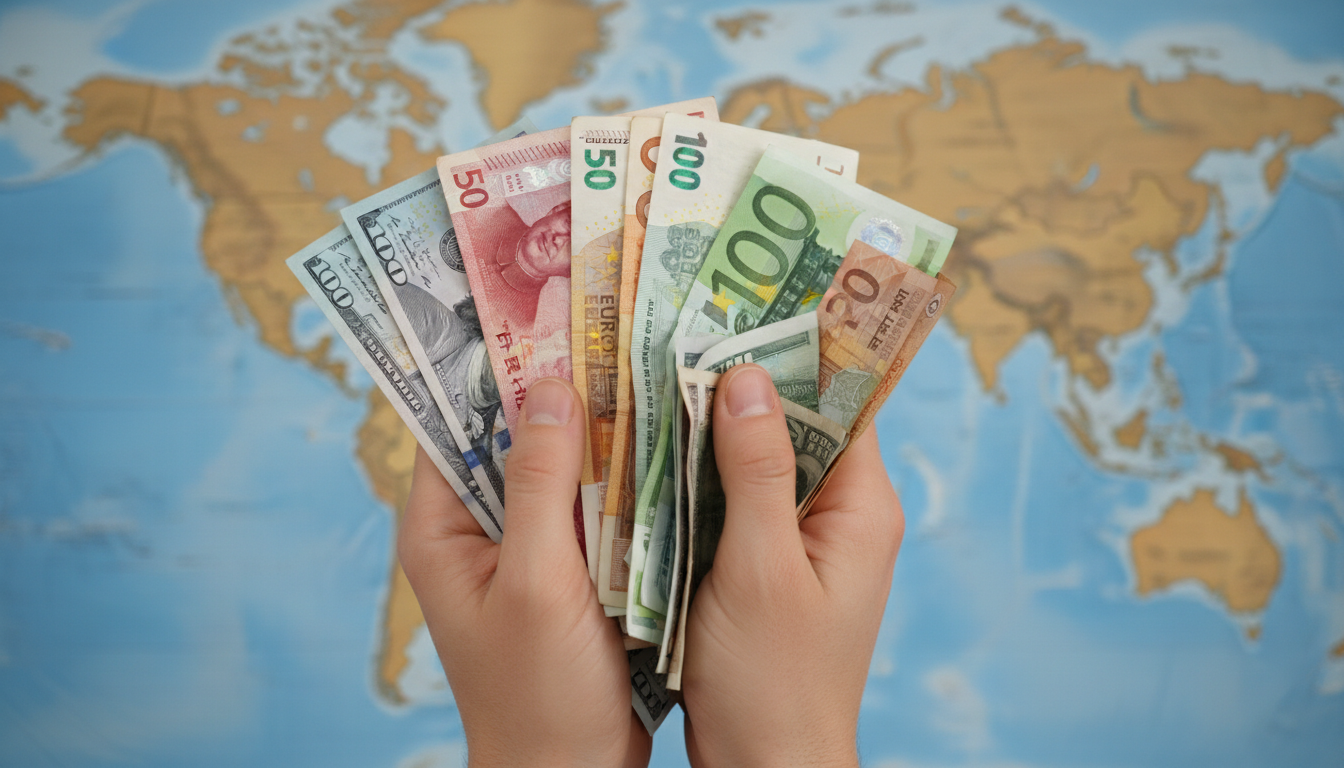
Supply and demand for a currency is the primary factor that determines exchange rates in the global market. This balance is influenced by key economic indicators, including interest rates, inflation, and the relative stability of a country's public debt or trade balance. These components work together to define what determines exchange rates and why currency values fluctuate.
Watching your profit margins dissolve due to a sudden shift in currency values is a frustration every international business leader understands. These fluctuations often feel like erratic market noise, yet they represent a calculated reaction to global economic shifts. Understanding the mechanisms behind these movements is essential for protecting your bottom line and planning long term international operations. In this guide, we analyze the core drivers of currency valuation, from the influence of central bank interest rates to the impact of national debt levels. You will gain a practical understanding of why market sentiment shifts daily, how specific currencies like the Norwegian Krone react to unique pressures, and why the distinction between mid market and retail rates is the most critical factor for your business wallet.
Understanding the basics: what determines exchange rates in simple terms
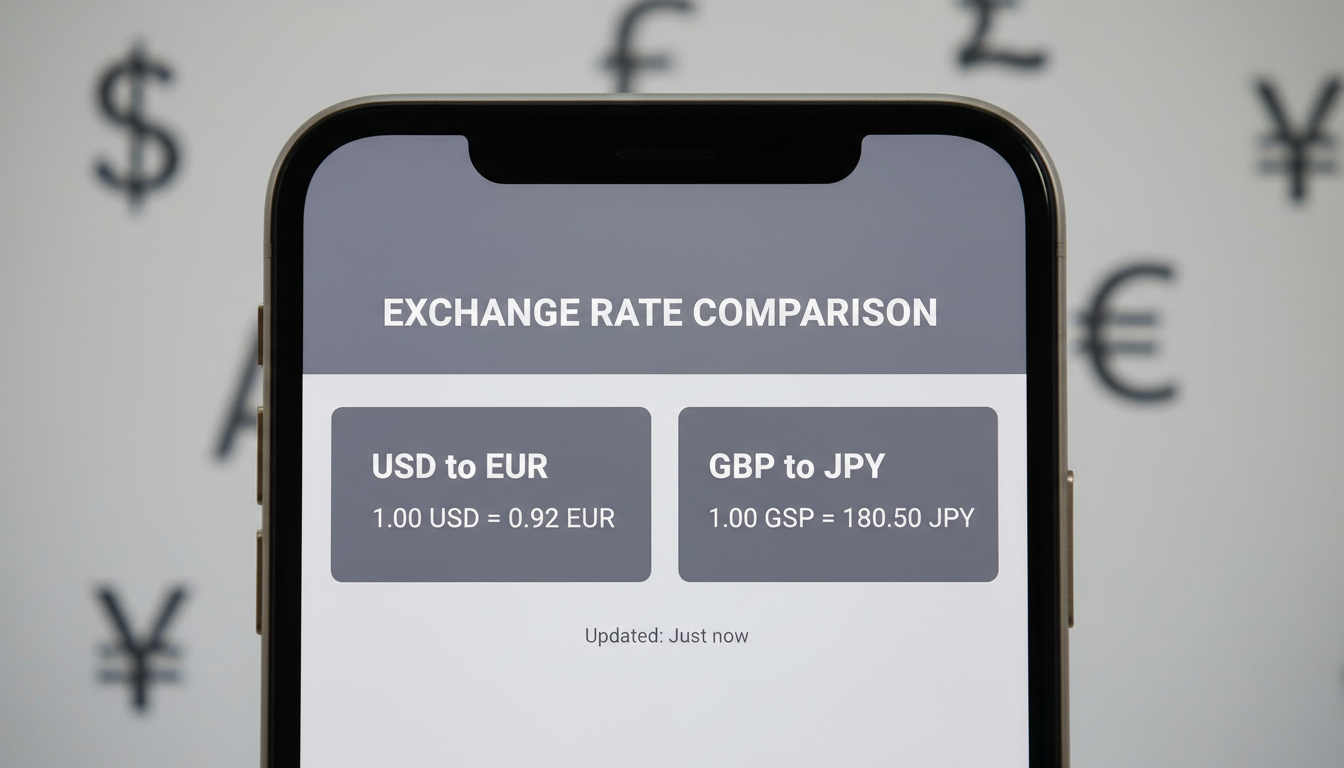
At its most basic level, an exchange rate is simply a price tag. Just as you might pay a specific amount of Norwegian Krone for a coffee at an Oslo café, an exchange rate tells you how much one currency costs when measured in another. If you are looking at the USD/NOK pair, you are seeing the price of one U.S. Dollar expressed in Krone.
Understanding what determines exchange rates starts with the law of supply and demand. Think of the global currency market as a large marketplace. If a sudden influx of buyers wants to purchase Norwegian Krone (NOK) but there are few sellers, the price of the Krone rises. If the market is flooded with NOK and nobody wants to buy it, the price falls. This constant tug-of-war between buyers and sellers creates the fluctuations you see on financial news sites every day.
While some nations use a fixed exchange rate, where the government pegs their currency to a stable asset like gold or the U.S. Dollar, most major currencies exist in a floating regime. For the NOK, USD, and EUR, the market decides the value in real-time. Recognizing this market-driven nature is essential when utilizing modern financial services to move money across borders. It allows you to look past the surface and identify the hidden fees and exchange rates that traditional providers often obscure. Mastering these basics ensures you are better prepared for international money transfers and more complex saving strategies.
The big three: inflation, interest rates, and economic health
Beyond the simple mechanics of supply and demand, three core macroeconomic pillars serve as the primary drivers for what determines exchange rates over the medium to long term. These factors, interest rates, inflation, and economic growth, function as the foundation upon which a currency's global value is built.
Interest rates are arguably the most powerful tool used by central banks, such as Norges Bank, to manage a nation's economy. When a central bank raises its benchmark interest rate, it effectively increases the return on investment for assets denominated in that currency. Global investors, seeking higher yields, will move their capital into that country to take advantage of the better returns. To buy those higher-yielding government bonds or bank deposits, they must first purchase the local currency. This surge in demand strengthens the currency's value relative to others.
Inflation has the opposite effect. It represents the rate at which the general level of prices for goods and services rises, subsequently causing purchasing power to fall. A country with consistently lower inflation rates typically sees its currency value increase, as its purchasing power remains strong relative to other nations. Conversely, high inflation usually leads to currency depreciation because the money buys fewer goods than it did previously. For those planning international money transfers, keeping an eye on the inflation differential between two countries is a practical way to anticipate long-term trend shifts and avoid the erosion of wealth caused by hidden fees and exchange rates.
Finally, the overall health of an economy, typically measured by Gross Domestic Product (GDP), signals to the world whether a country is a safe and profitable place to allocate capital. Strong economic growth suggests a robust business environment and high consumer spending, which attracts foreign direct investment. When global companies decide to expand operations or buy local equities, they generate a sustained demand for the national currency.
Factor | Impact on Currency | Primary Driver |
|---|---|---|
Higher Interest Rates | Appreciation | Attracts foreign capital seeking yield |
Lower Inflation | Appreciation | Preserves domestic purchasing power |
Strong GDP Growth | Appreciation | Signals a healthy environment for investment |
By monitoring these three pillars, you can move beyond reactive decision-making and begin to utilize modern financial services with a more strategic perspective on how global shifts will impact your international financial position.
Public debt and trade balances: the national balance sheet
While individual metrics like interest rates signal immediate market moves, the underlying strength of a nation’s balance sheet provides the long term context for what determines exchange rates. A primary component of this balance sheet is the Current Account, which reflects the country’s trade balance. When a nation consistently exports more goods and services than it imports, it maintains a trade surplus. Because foreign buyers must purchase the local currency to pay for these exports, demand increases, naturally bolstering the currency's value. Conversely, a persistent trade deficit implies the country is selling its own currency to purchase foreign goods, which can exert downward pressure on the exchange rate over time.
Public debt represents the other side of this national ledger. High levels of government debt are one of the significant factors affecting exchange rates because they introduce long term risk. While borrowing can stimulate growth, extreme debt loads may lead investors to fear that the government will resort to printing money to meet its obligations. This maneuver inevitably sparks inflation, which, as previously discussed, erodes purchasing power. In more severe cases, the perceived risk of a sovereign default causes capital flight. Global investors will shift their holdings to more stable environments, weakening the currency in the process.
Understanding these larger fiscal trends is essential for those utilizing modern financial services to manage wealth. By recognizing when a nation’s debt to GDP ratio becomes unsustainable, you can better anticipate shifts in value that might impact the cost of international money transfers or the efficacy of your saving strategies. This macro perspective ensures you aren’t caught off guard by the hidden fees and exchange rates that often fluctuate alongside national fiscal health.
Political stability and market sentiment: why rates change daily
While long term fiscal health dictates the baseline, the question of why do exchange rates change daily often comes down to market sentiment and political stability. If economic fundamentals are the slow moving tide, sentiment is the surface wave that can crash without warning. Currency traders do not just react to what is happening now; they are constantly pricing in what they expect to happen in the future. A single hawkish speech from a central bank official or a surprising poll result before an election can cause a sharp spike or dip long before any actual policy change occurs.
During periods of global geopolitical tension or war, investors typically exit emerging markets and move capital into safe-haven currencies like the U.S. Dollar (USD) or the Swiss Franc (CHF). This flight to safety creates immediate demand regardless of the current economic data in those countries. For those using modern financial services, understanding this psychological layer is crucial. It explains why a currency might weaken despite positive trade news or strengthen during a crisis. By recognizing that volatility is often driven by perception, you can better navigate hidden fees and exchange rates when planning international money transfers during turbulent market cycles. This real-time reaction to global news is a major component of what determines exchange rates on a minute-by-minute basis.
The Oslo perspective: what moves the Norwegian Krone (NOK)

While global sentiment provides the backdrop for currency fluctuations, residents and businesses in Oslo must contend with specific drivers that dictate the value of the Norwegian Krone (NOK). In international markets, the Krone is frequently categorized as a commodity currency. This classification stems from Norway’s status as a major exporter of oil and gas. Because energy exports constitute a massive portion of the nation's GDP, there is a historical correlation between global Brent crude prices and the strength of the Krone. When oil prices surge, demand for the NOK typically follows, often providing a boost for those planning international money transfers.
However, the energy sector is only one piece of the puzzle. Norges Bank, the central bank of Norway, plays a critical role by adjusting the key policy rate to balance inflation and economic activity. For an expat in Oslo or a local business, these interest rate decisions are a primary factor in what determines exchange rates for the NOK against major pairs like the EUR or USD. If Norges Bank maintains a higher interest rate relative to the European Central Bank, the Krone often appreciates as capital flows into Norwegian assets.
Understanding these local nuances is vital for smarter budgeting. A sudden drop in oil prices or a dovish shift from Norges Bank can quickly make your monthly transfers more expensive. By utilizing modern financial services, you can move beyond the basic rates offered at local bank branches. This specialized knowledge allows you to better navigate the hidden fees and exchange rates that can erode your purchasing power when the Krone experiences its characteristic volatility.
Mid market rates vs retail rates: how these factors hit your wallet

While the macroeconomic forces discussed above define the global value of the Krone, the rate you see on your bank statement often tells a different story. The figures reported on financial news sites or search engines represent the mid-market rate, also known as the interbank rate. This is the midpoint between the buy and sell prices of a currency on the global market. It serves as the real, fair exchange rate used by large institutions to trade with one another.
In contrast, retail rates are what traditional banks and high-street exchange booths offer to individuals. These providers take the mid-market rate and add a markup, often called a spread. This spread is a primary source of hidden fees and exchange rates that quietly inflate the cost of your transactions. While the market is essentially what determines exchange rates at the interbank level, the service provider determines the final cost you pay through this calculated margin.
Understanding this distinction is vital for accurate budgeting. For those managing international money transfers from Oslo, a 3% spread on a large sum can represent thousands of Krone lost to inefficiency. By choosing modern financial services that prioritize transparency and offer rates closer to the mid-market, you ensure that global economic shifts work for you rather than against your personal savings.
Understanding the diverse factors that drive exchange rates is essential for making informed financial decisions. While interest rates, inflation, and geopolitical events all play a role, the market remains inherently complex. If you want expert help navigating these fluctuations, our team is ready to guide your international Transfers safely. Having a professional perspective can provide the clarity needed to manage your global finances effectively; ensuring you are always prepared for whatever shifts the currency market may bring next.