
To understand how to read a currency exchange quote, you must identify the base currency as the first listed currency and the quote currency as the second. The numerical value represents how much of the quote currency is needed to purchase one unit of the base currency; evaluating the difference between the bid and ask prices will help you identify the spread and avoid hidden fees.
Navigating the complexities of international finance starts with a clear understanding of the numbers on the screen. For many, a currency exchange quote remains an indecipherable string of symbols and decimals that hides the true cost of a transaction. This lack of clarity often results in significant financial leakage through unfavorable spreads and hidden markups. Whether you are managing corporate cross border payments or planning an international expansion, mastering the anatomy of a quote is your primary defense against predatory pricing. In this guide, we break down the fundamental relationship between base and quote currencies, explain the mechanics of the bid ask spread, and demonstrate how to calculate the mid market rate. You will gain the practical tools needed to audit your bank's rates and ensure your capital remains intact across every border.
Why Understanding a Currency Quote is Your Best Financial Defense
Think of a currency quote as a price tag rather than a complex mathematical equation. Just as you would check the unit price of groceries at a supermarket in Oslo, you must scrutinize the rate offered when moving funds across borders. Significant financial loss often occurs not through visible service fees, but through a lack of clarity on how to read a currency exchange quote. Many traditional providers bury their profit margins within the exchange rate, relying on the fact that most consumers do not know how to identify the markup hidden in the digits.
At Borderless Money, we believe that modernized personal finance services should be built on transparency and education. This guide is designed to strip away the intimidating jargon of the foreign exchange market and provide a practical toolkit for navigating global markets. Expats sending money home and business owners managing international money transfers need these insights to build a secure financial future. By learning to decode these numbers, you move from being a passive consumer to an informed participant who can spot a bad deal instantly. The following sections will break down the mechanics of these rates, starting with the fundamental structure of the currency pair itself.
The Anatomy of a Quote: Base Currency and Quote Currency Explained
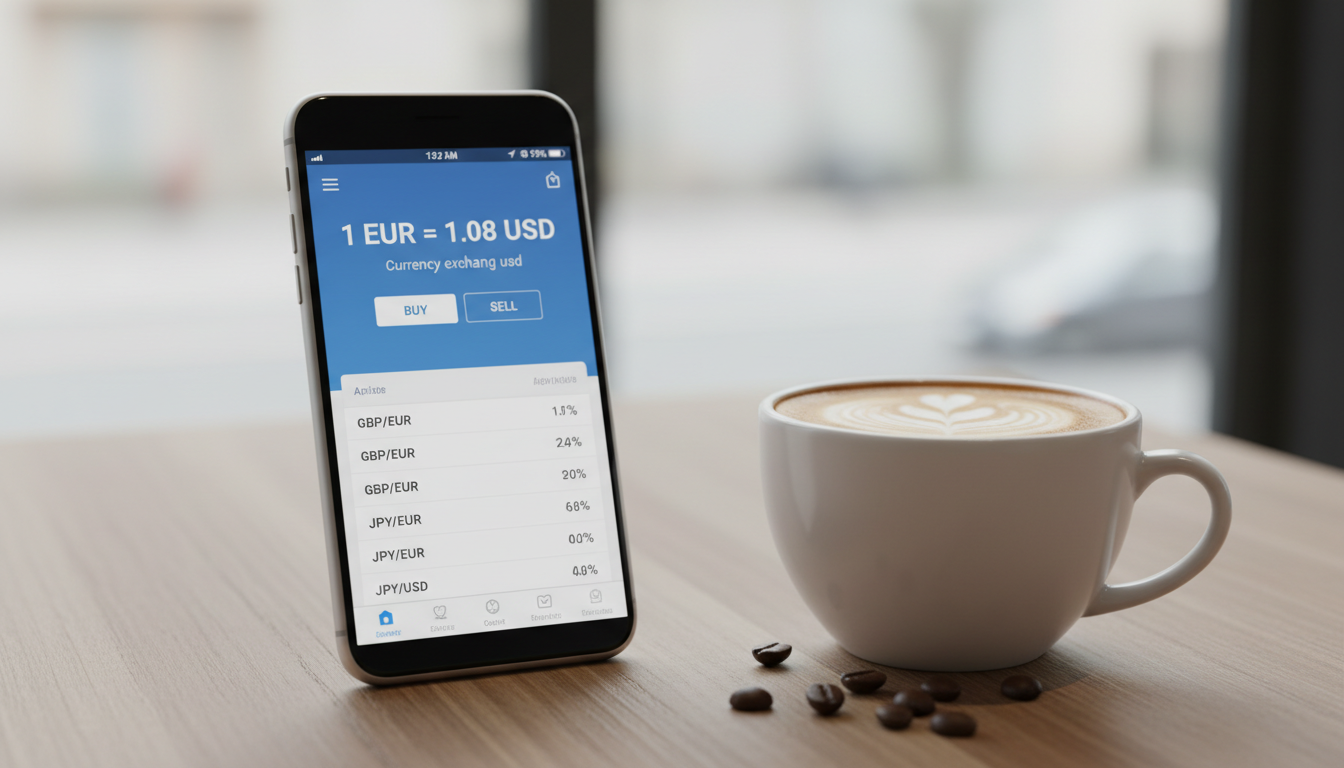
Every currency transaction is structured as a pair; you are simultaneously buying one currency and selling another. To understand how to read a currency exchange quote, you must first identify the roles of the two currencies involved. The first currency listed is the base currency, while the second is the quote currency.
In this relationship, the base currency serves as the fixed foundation. It is always represented as a single unit (1). The quote currency then tells you how much of that second currency is needed to equal one unit of the base. For example, if you are looking at the pair NOK/USD with a rate of 0.094, the Norwegian Krone (NOK) is the base currency and the US Dollar (USD) is the quote currency. This specific base currency and quote currency example shows that 1 Norwegian Krone currently buys 0.094 US Dollars.
Distinguishing between these two is vital for accurate budgeting and strategic international money transfers. If the number moves up, the base currency has strengthened; if it moves down, it has weakened relative to the quote. Unlike other market prices that might fluctuate in volume, the base currency in a quote is always the 'fixed' element of one. You are essentially asking: 'How much of the second currency is one unit of my first currency worth?' Understanding this structural anatomy ensures you are not misled by how rates are presented in modernized personal finance services or traditional banking apps. By isolating the base as a constant, you gain a clearer perspective on the actual purchasing power of your money.
Bid, Ask, and the Spread: The Secret Price of Convenience

Once you identify the base and quote currencies, the next step in learning how to read a currency exchange quote is recognizing that you will almost always see two different prices for the same pair. These are the Bid and the Ask. While these terms can seem like dense market jargon, they represent a simple merchant relationship. The bank or broker acts as a middleman; they buy currency from you at one price and sell it to someone else at a higher price.
From your perspective as a consumer, the Bid is the rate the bank is willing to pay you to take your currency off your hands. If you are holding Norwegian Krone and want to trade it for Euros, the bank bids for your NOK. Conversely, the Ask is the price the bank asks you to pay to buy that foreign currency from them. The Ask price is always higher than the Bid price because the institution needs to cover its overhead and generate profit.
The Spread is the mathematical difference between these two numbers. This gap is the secret cost of convenience. For example, imagine you are at a physical exchange desk at Oslo Central Station looking to trade NOK for EUR. The teller might Bid 11.40 NOK for every Euro you sell them, but Ask for 12.10 NOK for every Euro you want to buy. The 0.70 NOK spread represents a significant hidden cost. In contrast, using modernized personal finance services through a digital app often results in a spread of only a few øre.
A wider spread directly correlates to more of your wealth staying in the provider's pocket. When you compare rates for international money transfers, look for the narrowest gap between these two figures. A provider offering a seemingly competitive Ask rate may still be hiding a massive spread. Recognizing this gap is a vital skill for anyone managing money across borders.
How to Calculate Exchange Rates Yourself
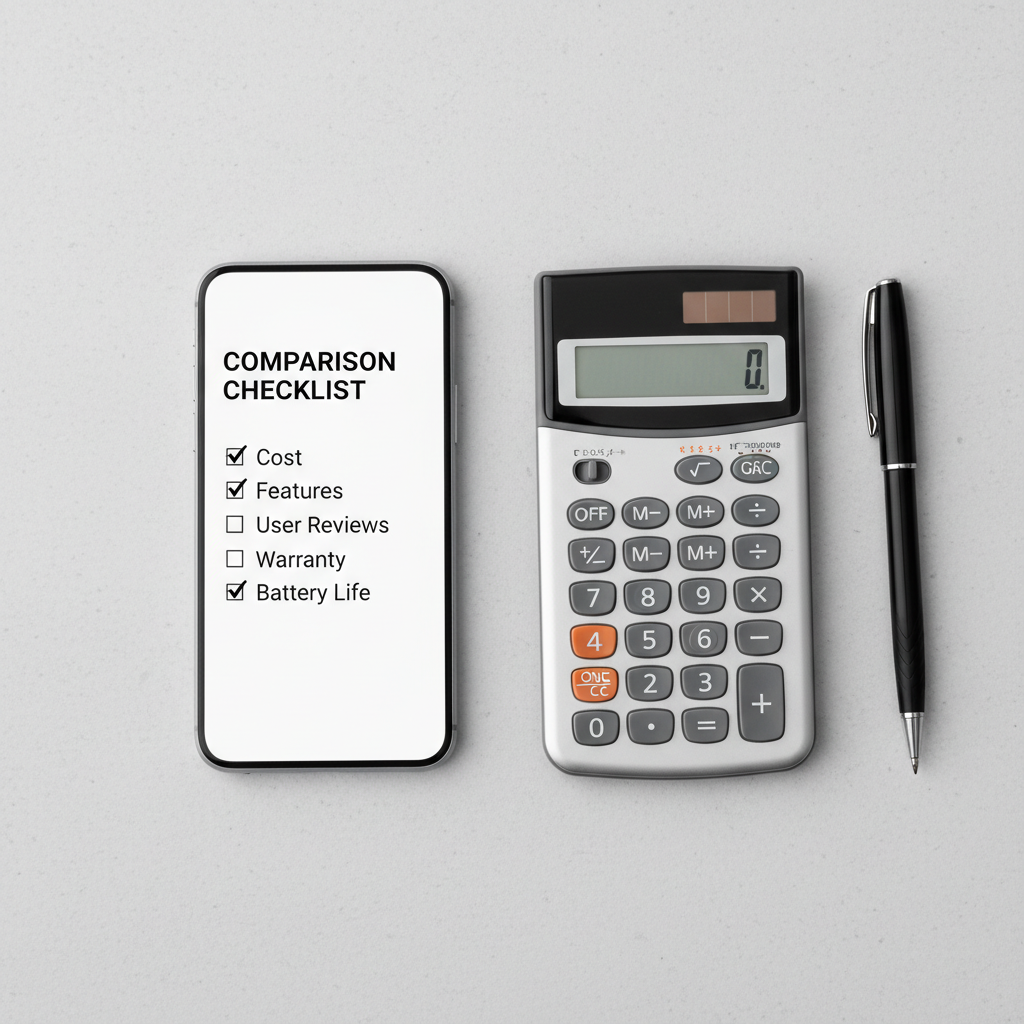
Understanding the spread is a defensive skill; calculating the final outcome is a practical necessity. To determine exactly how much money will arrive in a recipient’s account, you must apply a specific mathematical formula. When you are starting with the base currency, which is the first currency in the pair, you multiply your total amount by the quote rate. For instance, if you are sending 10,000 NOK and the rate for NOK/EUR is 0.087, the calculation is 10,000 × 0.087, resulting in 870 EUR.
However, many international money transfers require you to send a specific amount to cover a precise invoice or a rental deposit. If you need to send exactly 1,000 EUR, you must perform a reverse calculation. In this scenario, you divide the target amount of the quote currency by the exchange rate. Using the same rate of 0.087, the math is 1,000 / 0.087, which equals 11,494.25 NOK. This is the baseline amount you must provide before any additional service charges are applied.
To find your true 'effective exchange rate,' you must incorporate any fixed fees into the total cost. If a provider charges a flat 60 NOK fee for the transaction, your total cost is 11,554.25 NOK for that same 1,000 EUR. By dividing the total cost by the amount of foreign currency received, you find the real price you paid for each unit. Modernized personal finance services aim to simplify this process, but knowing how to calculate exchange rate totals manually protects you from hidden markups that often go unnoticed in a digital interface. This calculation ensures that you are never surprised by the final figure on your bank statement.
The Mid Market Rate: How to Spot a Bad Deal
Knowing how to calculate your total cost is only half the battle; you also need a benchmark to determine if that cost is fair. This benchmark is the mid market rate, often called the interbank rate. It represents the true, uninflated value of a currency pair, derived from the exact midpoint between global buy and sell prices. When you search for a rate on Google or Reuters, you are seeing this raw figure.
To master how to read a currency exchange quote, you must use this mid market rate as your financial North Star. Before committing to international money transfers, pull up the current interbank rate on a trusted financial news site. Compare this to the rate your provider offers. If the mid market rate for NOK/GBP is 0.073 but your bank quotes you 0.070, they are pocketing a 4.1% markup before any stated fees are even applied.
Identifying this gap is the most effective way to protect your capital. Modernized personal finance services prioritize transparency by keeping their rates as close to this midpoint as possible. By treating the mid market rate as the only fair price, you gain the leverage needed to reject predatory quotes and maintain control over your global wealth.
Common Pitfalls When Reading Quotes at Banks and Airports
Many providers at Oslo Airport or high-street banks use Zero Commission as a marketing hook. This phrase is a misnomer designed to distract from the actual cost. Even if a provider does not charge a visible transaction fee, they adjust the quote itself to their advantage. This padding is essentially a hidden tax on your international money transfers or cash exchanges. If you see a sign claiming no fees, the price you are being quoted is likely far removed from the mid market rate discussed earlier.
A frequent trap for Norwegians traveling abroad involves Dynamic Currency Conversion (DCC). When you use your Norwegian bank card at a foreign ATM or retail terminal, the machine may ask if you want to pay in NOK rather than the local currency. Choosing NOK allows the merchant's bank to set the rate, which is almost always significantly worse than your own bank's rate. You should always decline this convenience and pay in the local currency. Mastering how to read a currency exchange quote means recognizing that the most helpful-sounding options are often the most expensive. By opting for the local currency, you ensure that modernized personal finance services or your card issuer handle the conversion, typically resulting in a more favorable outcome for your wallet.
Mastering the ability to read currency quotes is essential for minimizing the hidden costs often embedded in international payments. By identifying spread margins and comparing the current market rates, you can ensure your business retains more of its capital. While managing these details independently is a valid approach, many professionals prefer the peace of mind that comes with specialized support. If you want expert help navigating market fluctuations, consider utilizing our Transfers solutions. Our dedicated team is ready to help you manage your global currency needs with precision and transparency.