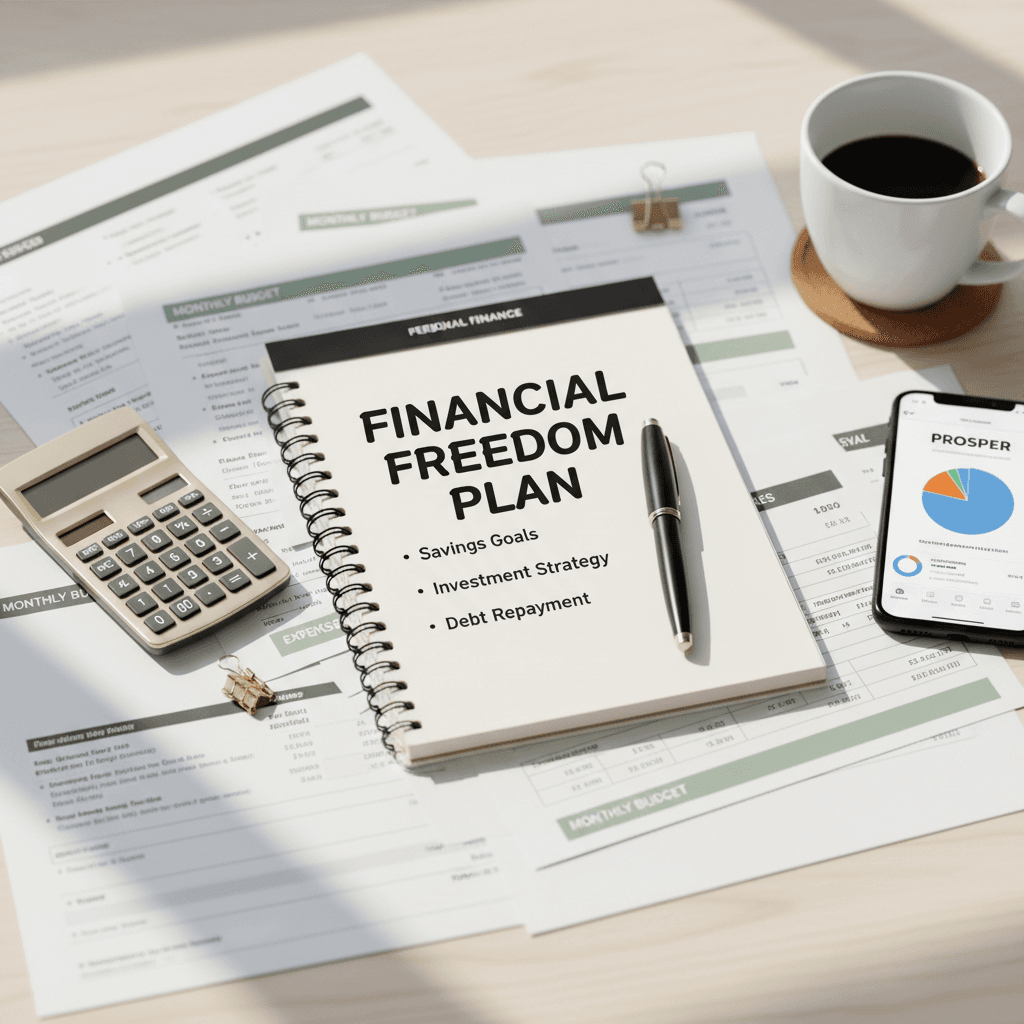
Successful strategies for how to build an emergency fund include calculating three to six months of living expenses and opening a liquid, high-yield savings account. Automating your monthly contributions ensures consistent progress toward your target while keeping the money accessible for unexpected financial needs. This approach provides a clear roadmap to financial resilience through disciplined saving and proper account selection.
Financial emergencies rarely announce their arrival, yet they possess the power to dismantle years of disciplined wealth building in a single afternoon. For many, a sudden medical bill or an unexpected career transition results in a frantic reliance on high interest credit; this creates a cycle of debt that is difficult to escape. Developing an emergency fund is not an optional luxury; it is the fundamental infrastructure of your financial life. This guide provides a strategic framework for achieving total resilience. We will examine the 3, 6, 9 savings rule, explore the 70, 20, 10 budgeting method, and determine whether you should prioritize savings over debt repayment. You will gain the specific, actionable steps needed to build a liquid reserve that secures your future against the unpredictable nature of the global economy.
Why an Emergency Fund is Your Most Important Financial Asset
An emergency fund is the bedrock of any successful financial plan. While many focus on wealth accumulation through smart saving strategies, this specific fund serves a different purpose. It is not a savings account for a new car or a summer home in Kragerø; it is a dedicated pool of liquid cash intended for survival and immediate crisis management.
Differentiating between goal-based savings and an emergency fund is critical. Goal savings are proactive and intended for future spending, whereas an emergency fund is reactive and intended for protection. This distinction provides a significant psychological advantage, as it eliminates the chronic stress associated with financial uncertainty. When you know your basic needs are covered regardless of external circumstances, you can make more rational long term decisions.
In Oslo, residents benefit from a robust social safety net, yet individual liquidity remains essential. Government programs do not cover every crisis instantly. You may face urgent dental work, sudden home repairs, or the need for a last minute international flight for a family emergency. Even if you are saving money with irregular income, knowing how to build an emergency fund ensures you can manage these costs without accruing high interest debt. Having cash on hand also helps in avoiding hidden costs that often arise when you are forced to make rushed financial choices during a crisis.
How Much Should You Actually Save in an Emergency Fund?

The conventional wisdom for how to build an emergency fund often suggests a flat three to six months of income, but this approach lacks necessary precision. To determine your personal target, you must base the calculation on essential expenses rather than your gross salary. Essential expenses include your rent or mortgage, utilities, food, insurance, and transportation. In Oslo, these baseline costs can be significant, so your calculation should reflect the actual amount required to sustain your household if all other spending ceased.
Certain professional and lifestyle factors demand a more conservative buffer. For example, individuals who are saving money with irregular income should aim for the upper end of that scale, or even beyond. Freelancers and gig workers lack the predictability of a monthly payslip, making a larger liquidity cushion vital for weathering lean months.
Personal circumstances also shift the needle. If you have dependents, your risk profile changes as the cost of a sudden medical issue or home repair is amplified. Furthermore, expats living in Norway face unique financial pressures. A family emergency in your home country often requires booking a last minute international flight, a cost that can easily reach tens of thousands of NOK. By adjusting your savings target to account for these specific vulnerabilities, you ensure that your fund is large enough to be functional when you truly need it. This targeted approach is a key part of smart saving strategies that prioritize security over simple accumulation.
The 3, 6, 9 Rule for Emergency Savings

The 3, 6, 9 rule provides a structured framework to refine your savings target based on your specific risk profile. Instead of a one size fits all approach, this tiered strategy ensures you are neither underprotected nor keeping too much capital idle when it could be better utilized in other smart saving strategies.
Three Months: The Baseline This target is suited for single individuals with minimal dependents, high job security, and low fixed costs. If you work in a stable sector with high demand for your skills and have low overhead, a three month buffer typically covers the gap between jobs or a sudden domestic repair.
Six Months: The Household Standard This tier is recommended for families or individuals with moderate job stability. The presence of children or a mortgage increases your financial liability; therefore, a longer period of protection is required to maintain stability if your primary income is interrupted.
Nine Months: The High-Risk Buffer This level is essential for business owners, those saving money with irregular income, or professionals in highly specialized roles where the hiring cycle is naturally longer. When learning how to build an emergency fund, recognizing that your specific income volatility requires a deeper cushion is the first step toward genuine resilience. By categorizing yourself into one of these tiers, you can set a logical, data driven goal for your liquidity.
The 70, 20, 10 Rule: Integrating Savings into Your Monthly Budget
Once you have identified your target tier, the next challenge is restructuring your cash flow to meet it. The 70, 20, 10 rule offers a simplified framework for integrating these smart saving strategies into your daily life. This method allocates 70% of your take home pay to essentials, 20% to savings and debt, and 10% to lifestyle choices. By prioritizing the 20% bucket, you create a consistent mechanism to fund your liquidity buffer without sacrificing your quality of life.
Consider a professional in Oslo earning a net monthly salary of 40,000 NOK. Under this framework, 28,000 NOK (70%) covers high priority costs like rent in Majorstuen, groceries, and a Ruter monthly pass. The 4,000 NOK (10%) provides for leisure and social activities. Crucially, the remaining 8,000 NOK (20%) is directed immediately into your reserves. At this rate, a single individual can reach a basic three month emergency fund in less than a year.
This disciplined allocation is particularly effective for avoiding hidden costs that stem from unplanned spending. By ringfencing your savings at the start of the month, you ensure that the process of learning how to build an emergency fund moves from a theoretical goal to a mathematical certainty. Maintaining this ratio prevents lifestyle creep and ensures your financial foundation remains stable even as your income grows.
Should You Build an Emergency Fund Before Paying Off Debt?
Directly addressing the conflict between debt repayment and saving is essential for financial clarity. While the mathematical argument often favors paying off debt first due to high interest rates, the practical reality of smart saving strategies dictates a different approach. You should establish a starter emergency fund of approximately 10,000 to 20,000 NOK before aggressively tackling high-interest liabilities.
This starter fund serves as a financial circuit breaker. Without a liquid buffer, any unforeseen expense, such as a broken appliance or an urgent dental procedure, will inevitably be charged back to a credit card. This creates a destructive cycle where you pay down debt only to accrue it again at 20% interest or higher. By securing this small cash reserve first, you break the dependence on high-cost revolving credit.
It is vital to distinguish between debt types. High-interest debt, such as credit cards or consumer loans, should be targeted immediately after the starter fund is established. In contrast, low-interest debt, such as Norwegian student loans from Lånekassen or a standard mortgage, carries a much lower cost of capital. For these, maintaining a larger liquidity buffer and avoiding hidden costs is often more beneficial than rapid repayment. Understanding this hierarchy is a fundamental step in learning how to build an emergency fund that actually protects your long-term solvency.
Where to Keep Your Emergency Fund for Maximum Accessibility
The effectiveness of an emergency fund depends entirely on its liquidity. While it is tempting to seek higher returns, these reserves should never be placed in volatile assets like stocks or cryptocurrency, nor in term deposits that lock your capital away for fixed periods. If a crisis occurs, you cannot afford to wait for a market recovery or pay a penalty for early withdrawal.
Instead, prioritize high yield savings accounts that offer competitive interest while allowing for instant transfers to your primary transaction account. For the global citizen or expat in Oslo, accessibility often transcends national borders. If an emergency involves family abroad, you need immediate access to your capital without being penalized by predatory exchange rates. Selecting an account that facilitates easy international movement is a core part of smart saving strategies. By maintaining your fund in a stable currency and utilizing platforms that focus on transparency, you are better equipped for avoiding hidden costs such as high markups on currency conversion during a period of high stress.
Five Practical Steps to Build Your Fund from Zero

Moving from financial theory to execution requires a structured sequence of actions. Transitioning your liquid reserves into a dedicated high-yield account is only effective if you have a consistent method for capitalization. Follow these five practical steps to construct a resilient buffer from the ground up.
Calculate your survival number. Determine the absolute minimum monthly cost to maintain your life in Oslo. This includes essential housing, utilities, basic groceries, and a Ruter zone 1 pass. This survival number serves as the unit of measurement for your 3, 6, or 9-month targets.
Set an attainable micro-goal. Instead of focusing on the total six-month target immediately, aim for an initial 10,000 NOK. Reaching this first milestone provides immediate psychological relief and proves that your system is functional.
Automate on payday. Schedule an automatic transfer for the day after your salary is deposited. By moving the money before you begin your monthly spending, you treat your emergency fund as a non-negotiable expense.
Audit recurring leaks. Review your transaction history for forgotten subscriptions or excessive service fees. Eliminating these inefficiencies is a core component of smart saving strategies and helps in avoiding hidden costs that quietly drain your monthly surplus.
Redirect all windfalls. Treat tax returns, performance bonuses, or cash gifts as found money. Rather than inflating your lifestyle, deposit these sums directly into your fund. This is the most efficient way to accelerate the process of how to build an emergency fund without impacting your existing daily budget.
Maintaining Your Fund: When to Use It and How to Rebuild
Building the reserve is only the first half of the strategy; the second half is knowing when to deploy it. A true emergency is an unplanned, high-stakes event that threatens your health, safety, or ability to earn income. This includes sudden job loss, urgent dental surgery, or the need for immediate international travel due to a family crisis abroad. Conversely, a clearance sale at a boutique or a spontaneous weekend trip to London does not qualify as an emergency. These are lifestyle choices that belong in your 10% discretionary budget rather than your liquidity buffer.
Once you tap into these reserves, you must prioritize refilling them immediately. Treat the replenishment of your fund as your primary financial obligation, similar to a monthly rent payment. Revert to the 70, 20, 10 rule, perhaps even temporarily reducing your lifestyle bucket to accelerate the recovery. Understanding how to build an emergency fund includes accepting that it is a revolving resource. By consistently applying smart saving strategies to refill the gap, you maintain a permanent shield against future volatility and keep avoiding hidden costs associated with emergency borrowing or credit reliance.
Building a solid emergency fund is the foundation of long-term financial security. By starting small and automating your savings, you create a safety net that protects you against life's unpredictable moments. While these steps are straightforward, managing personal finances can often feel overwhelming. If you want expert help navigating your unique situation, we invite you to explore our Services. Our team is here to help you design a comprehensive plan that ensures your financial resilience remains strong for years to come.